“The important thing is to never stop questioning.”
- Albert Einstein
Our Goal
At English Martyrs Catholic Primary School, we encourage curiosity in our students about the world around them. Our Science curriculum helps children respect both living and non-living things while gaining knowledge, skills, and positive attitudes. Students will build and develop key knowledge identified for each year group, following the national curriculum and progressing through planned phases. Key skills are also developed systematically to meet national expectations.
We design our curriculum to ensure children learn scientific concepts through hands-on experiences like experiments and using equipment. We make sure to include experts and scientific places of interest to enhance learning outside the classroom. Cross-curricular links are also planned to make learning relevant. We nurture a love of science by encouraging children to ask questions and explore their surroundings.
How We Teach Science
Teachers create a positive environment for science learning, expecting all pupils to achieve high standards.
- Review and Build: Each new unit starts with a recap of related knowledge from previous years, helping children connect new information with what they’ve already learned. We introduce key vocabulary with definitions and visuals to ensure understanding.
- Assessing Knowledge: At the start of each topic, we assess what children already know to inform our planning. This process is documented in their Science books. At the end, children revisit the topic to see what they have learned, allowing teachers to reinforce any key knowledge that isn’t secure.
- Problem Solving: We incorporate problem-solving opportunities in our lessons. Children ask questions and use their scientific skills to find answers, fostering curiosity.
- Engaging Lessons: Teachers plan engaging lessons with high-quality resources, using precise questioning and regular assessments to ensure all pupils progress. Tasks are designed to challenge all learners and support inclusion.
We ensure skills and knowledge build progressively each year. As children’s understanding grows, they become more proficient in using scientific equipment, interpreting results, and drawing evidence-based conclusions. A ‘Knowledge and Understanding’ sheet in their Science books outlines the topics covered each year.
Working Scientifically
We integrate 'Working Scientifically' skills into lessons, developing these skills systematically over time. New vocabulary and concepts are introduced through direct teaching. A ‘Working Scientifically Butterfly’ in each pupil’s book helps monitor skill coverage.
Special Events
Events like British Science Week and Mars Day provide off-timetable learning, involving families and the community, to broaden science education and apply knowledge and skills.
Impact
Our approach ensures a fun, engaging, and high-quality science education, giving children a strong foundation to understand the world. By engaging with the local environment, children learn through varied, firsthand experiences. Workshops, trips, and expert interactions show children how science changes lives and its importance for the future.
Children learn about science careers through community links and national agencies, working with professionals and positive role models from various backgrounds. This exposure helps all children feel they can be scientists and achieve in the field.
Children at English Martyrs enjoy science, becoming motivated learners with a solid scientific understanding. Our science provision is recognized by the ‘Primary Science Quality Mark’ at ‘Gilt’ level.
Related Blog Posts
Magic in Nursery
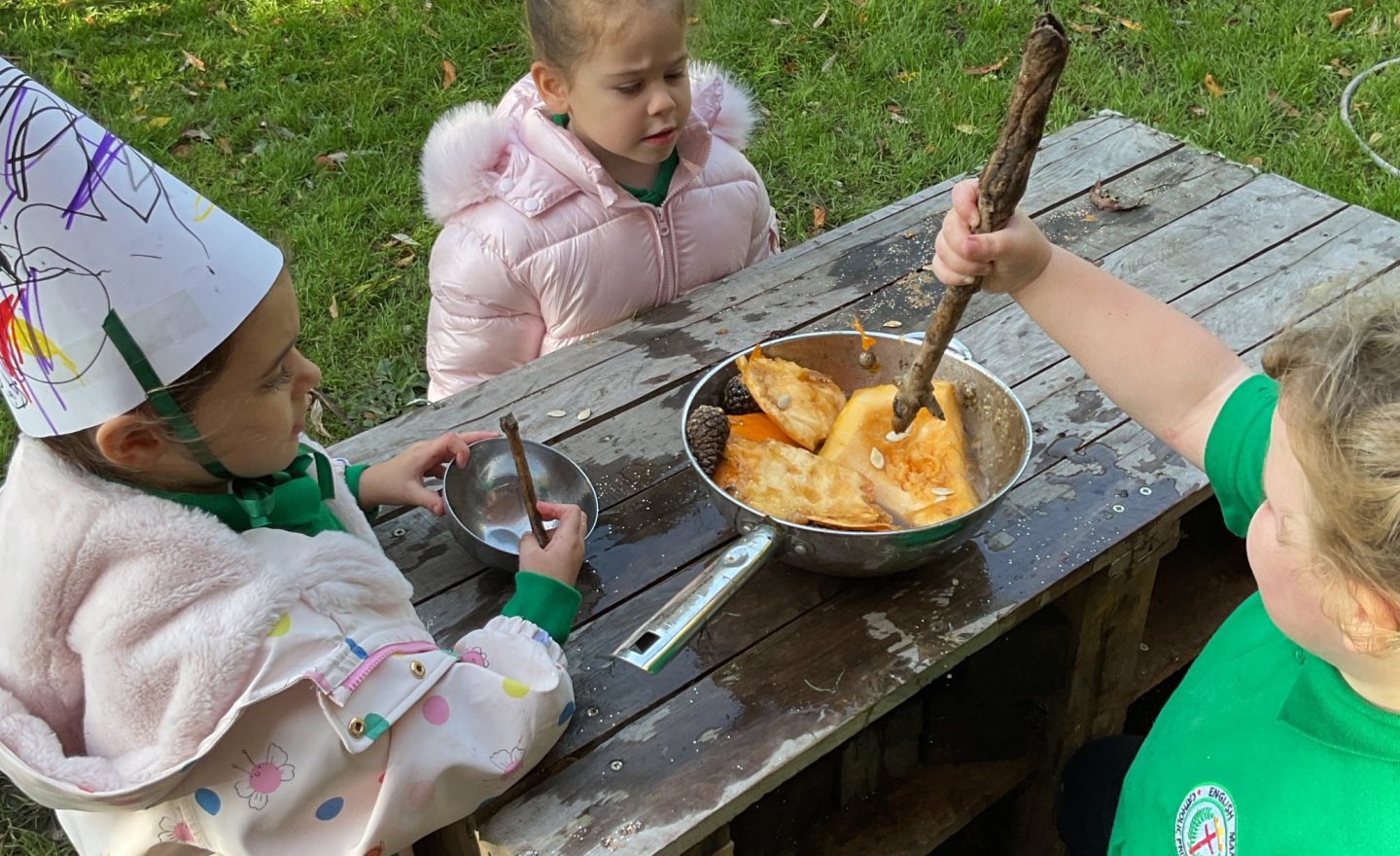
The children have been creating magic recipes and potions using pumpkins and other natural ingredients in our forest area. We have created our own pumpkin patch and have been learning about pumpkins describing their colour, shape and size. We also had lots of fun decorating our magician hats.
World Space Week
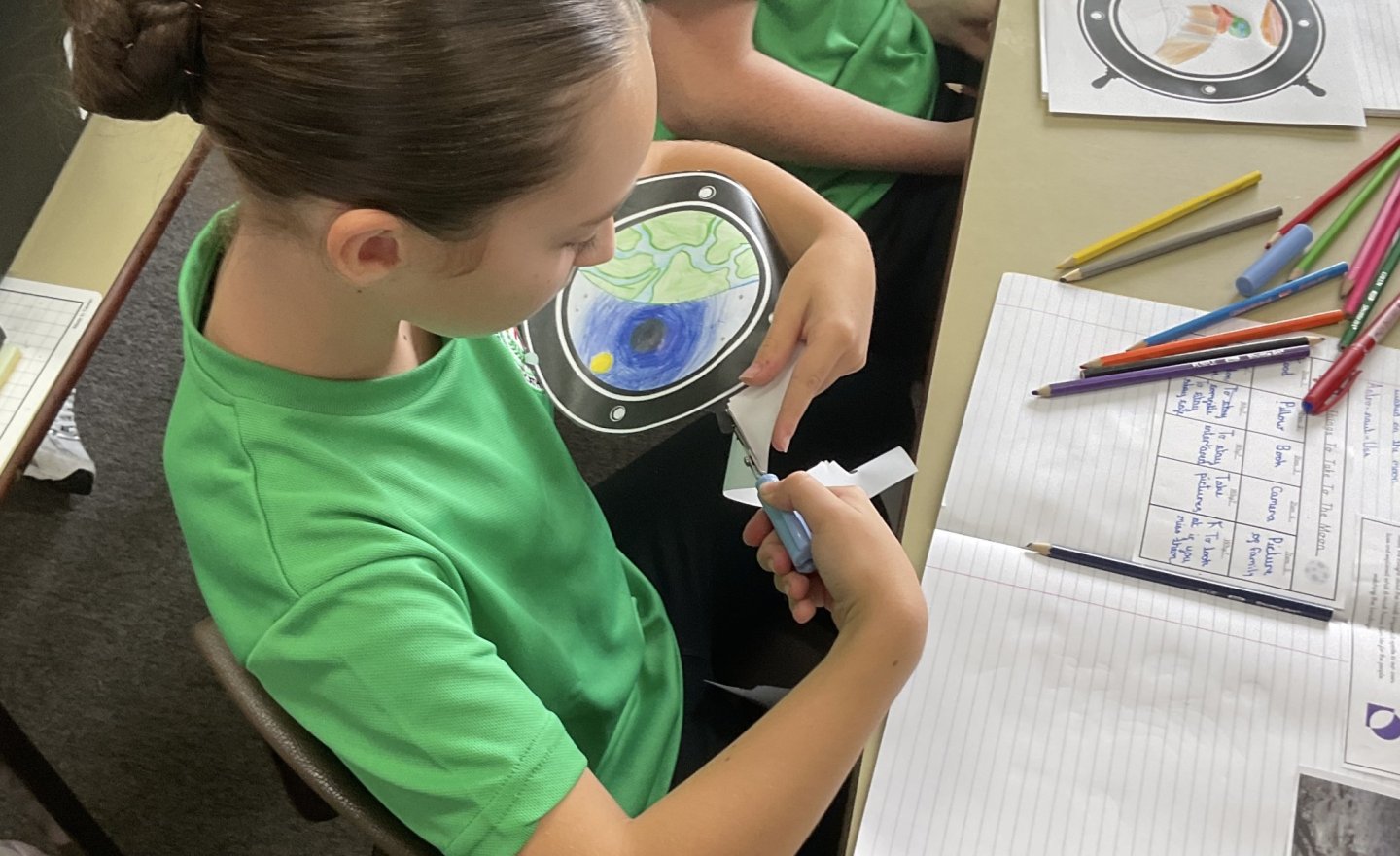
As part of World Space Week, we explored the race to land on the Moon.
We then discussed what items we would take to space and why.
Finally, we created artwork imagining what we would see if we looked out of a rocket window.
Day and night
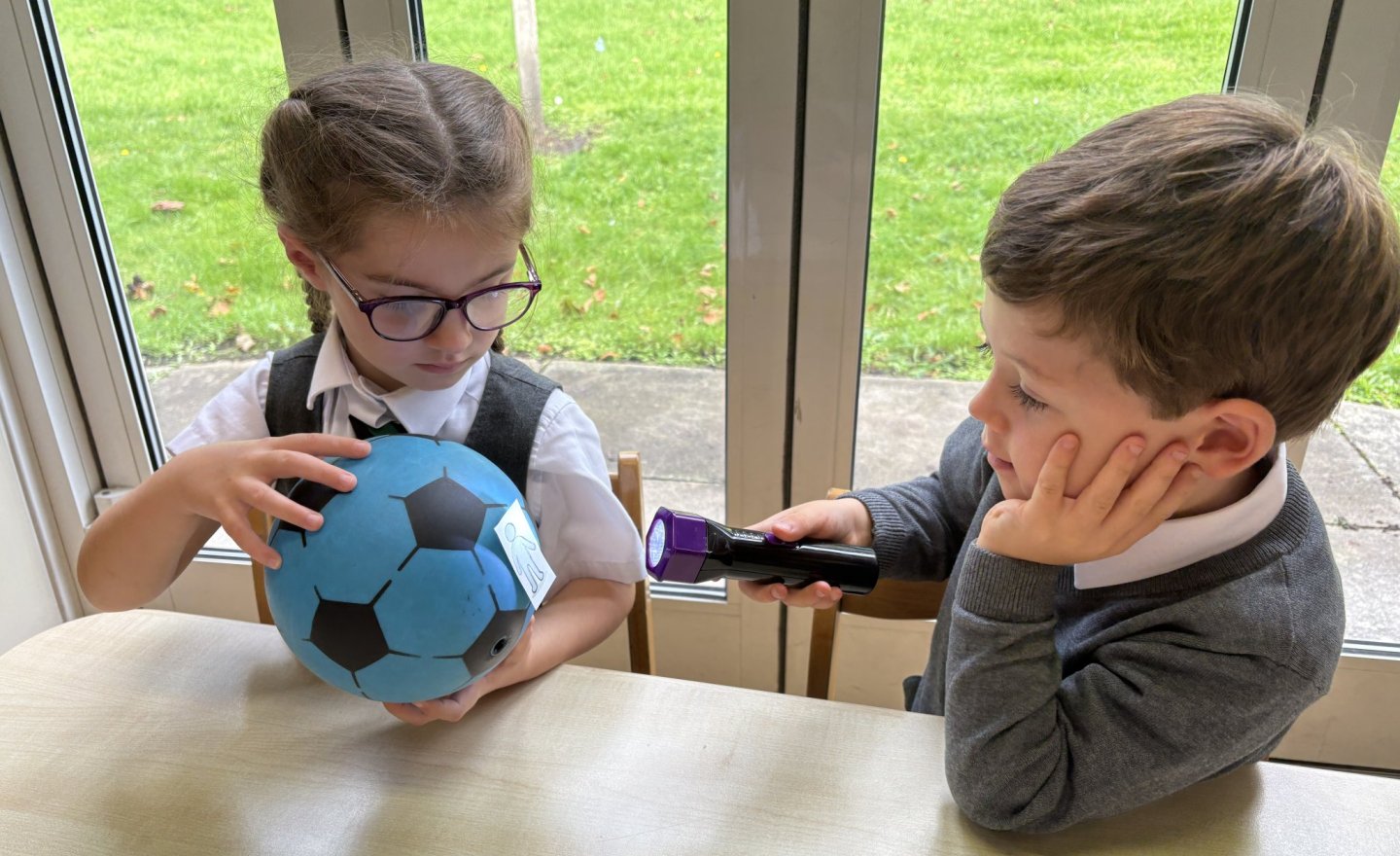
The children have been exploring day and night. We talked about how the Earth rotates and makes a full turn every day. We discussed when part of the Earth faces towards the sun it is daytime and when Earth faces away from the sun it is nighttime. We have learnt that Earth rotates and the sun…